
Our Products
Solar Water Heating System
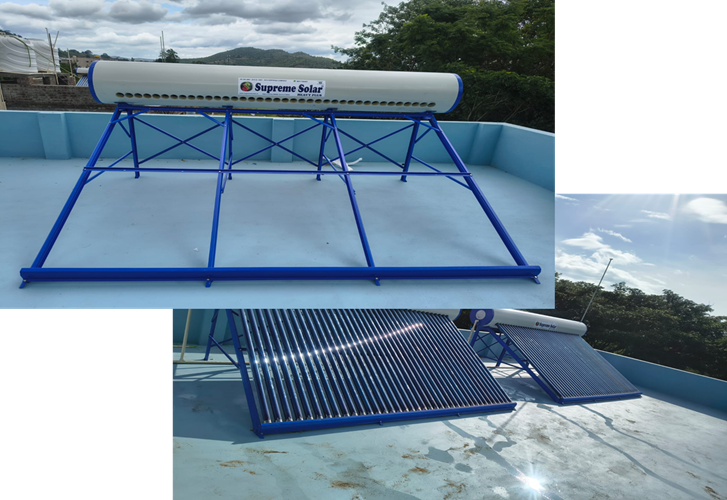
The primary components of a solar water heating (SWH) system work in concert to heat and store water
Key Features
Solar Collectors:
These panels or tubes absorb solar radiation. The two main types are:
Insulated Storage Tank:
This tank stores the hot water. Good insulation (like high-density PUF) is crucial to minimize heat loss, ensuring hot water is available overnight and in the morning. Inner tanks are often made of durable materials like stainless steel or have special coatings (e.g., glass-lined, polymer) to resist corrosion, especially in hard water areas.
Piping and Support Structure:
A rigid, often aluminium or stainless steel, frame securely mounts the collectors on the roof or ground, connected by insulated pipes to the water supply and use points.
Heat Transfer Mechanism:
Systems can be direct (circulate potable water) or indirect (circulate a non-freezing heat-transfer fluid via a heat exchanger).
Operating Principle:
Systems can be passive (rely on natural convection, or “thermosiphon effect”) or active (use electric pumps and controllers for durations.
Heat Pump
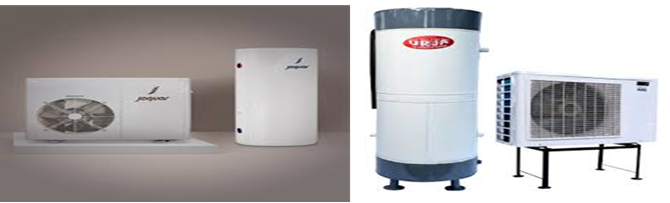
Heat pumps are renowned for their high energy efficiency, providing both heating and cooling in a single, quiet system. They operate by moving heat rather than generating it, significantly lowering energy consumption and greenhouse gas emissions
Core Functionality
Dual Functionality:
Heat pumps offer year-round indoor climate control, providing efficient space heating during colder months and air conditioning (cooling and dehumidification) in warmer weather. A reversing valve is the key component that switches the direction of the refrigerant flow to change modes.
High Energy Efficiency:
Because heat pumps transfer heat from natural sources (air, ground, or water) rather than burning fuel, they can deliver two to five times more thermal energy than the electrical energy they consume, as measured by a high Coefficient of Performance (COP), Seasonal Energy Efficiency Ratio (SEER), and Heating Seasonal Performance Factor (HSPF).
Heat Source Versatility:
Depending on the type, heat is extracted from the outdoor air (air-source), the stable temperature of the ground (ground-source/geothermal), or a body of water (water-source).
Domestic Hot Water:
Many air-to-water or ground-to-water systems can be integrated with a hot water cylinder to provide efficient domestic hot water, either as stand-alone units or combined with space conditioning systems.
Quiet Operation:
Modern heat pumps are designed for low noise production, with advanced components like brushless inverter fans and sound-dampening materials, operating at sound levels similar to a household refrigerator.
Why Choose Us
10+ Years of Expertise
Trusted experience in solar and electrical solutions.

100+ Projects Delivered
Proven success across homes and businesses.
End-to-End Service
From design to installation, we handle it all.

Skilled Professional Team
Expert engineers led by Satheesha N. G.
Sustainable & Affordable
Clean energy that saves costs and the planet.